Dom Pérignon vs Cristal: Which Luxury Champagne Is Better?

Dom Pérignon vs Cristal is one of the classic luxury Champagne debates. Both are vintage-only prestige cuvées, both carry generations of history and both have become symbols of celebration, wealth and good taste. But despite occupying similar territory at the top of the Champagne market, the two bottles are not interchangeable.
For most buyers, the question is much simpler than the history behind either house: if you have roughly $300 to $400 to spend on one special bottle, should you buy Dom Pérignon or Cristal? Dom Pérignon generally offers the easier financial entry point, enormous name recognition and a polished, expressive drinking experience. Cristal typically commands a higher price while placing greater emphasis on estate vineyards, minerality, precision and connoisseur appeal.
Here is how Dom Pérignon and Cristal compare on taste, price, prestige, aging potential and overall value. Dom Pérignon 2018 and Cristal 2016 are referenced here to illustrate each house’s contemporary style and positioning rather than as a direct vintage-versus-vintage tasting comparison. Dom Pérignon’s current 2018 expression is a reported 54% Chardonnay and 46% Pinot Noir, while Louis Roederer confirms Cristal 2016 is composed of 58% Pinot Noir and 42% Chardonnay.

Dom Pérignon vs Cristal: What’s the Difference?
The quickest answer is that Dom Pérignon is generally the more approachable entry into prestige Champagne, while Cristal usually costs more and presents a more vineyard-driven and mineral-focused proposition.
Both Champagnes are produced only as vintages rather than maintaining a permanent non-vintage expression. LVMH says Dom Pérignon may even choose not to declare a vintage when a harvest does not satisfy the house’s ambitions. Louis Roederer similarly produces Cristal only in years when its grapes achieve the level of maturity the house requires.
Both also depend on Chardonnay and Pinot Noir and spend years developing before release. The biggest differences become clearer when considering style, recognition, provenance and price.
Dom Pérignon Has the Bigger Cultural Footprint
Few names in Champagne carry the instant recognition of Dom Pérignon. Its history reaches back to Dom Pierre Pérignon, who was appointed procurator of the Abbey of Hautvillers in 1668 and spent decades working to improve the wines produced there. Contrary to a popular myth, Pierre Pérignon did not invent Champagne, but his work became deeply intertwined with the history and mythology of the region.
Modern Dom Pérignon has built its identity around vintage Champagne. Every release is intended to express both the character of a particular harvest and the house’s pursuit of harmony, with at least eight years of elaboration before a standard Vintage reaches maturity for release. Yet its biggest advantage in this comparison might have nothing to do with winemaking.
Dom Pérignon is one of those luxury names that requires almost no explanation. Even someone who knows little about Champagne is likely to understand what a bottle of Dom represents. That cultural reach has helped make it an enduring presence at weddings, nightclubs, award shows, luxury dinners and milestone celebrations. That recognition becomes particularly important when choosing a bottle as a gift.

Cristal Was Originally Made for a Russian Tsar
Cristal has the more dramatic origin story. Louis Roederer created the Champagne in 1876 at the request of Tsar Alexander II of Russia. Its transparent, flat-bottomed bottle became a defining part of the wine’s identity and remains one of the most recognizable packages in Champagne.
Today Cristal remains Louis Roederer’s flagship prestige cuvée, but its modern appeal extends well beyond the story of its imperial origins. Roederer emphasizes the estate vineyards behind Cristal and produces the Champagne only during years of exceptional maturity. The house says the wine receives six to 10 years of bottle aging, is riddled exclusively by hand and rests for an extended period following disgorgement.
That combination gives Cristal a slightly different luxury proposition than Dom Pérignon. Dom has arguably become the more universally recognizable status symbol, while Cristal retains an especially strong appeal among serious wine drinkers interested in vineyard provenance, vintage expression and long-term development.
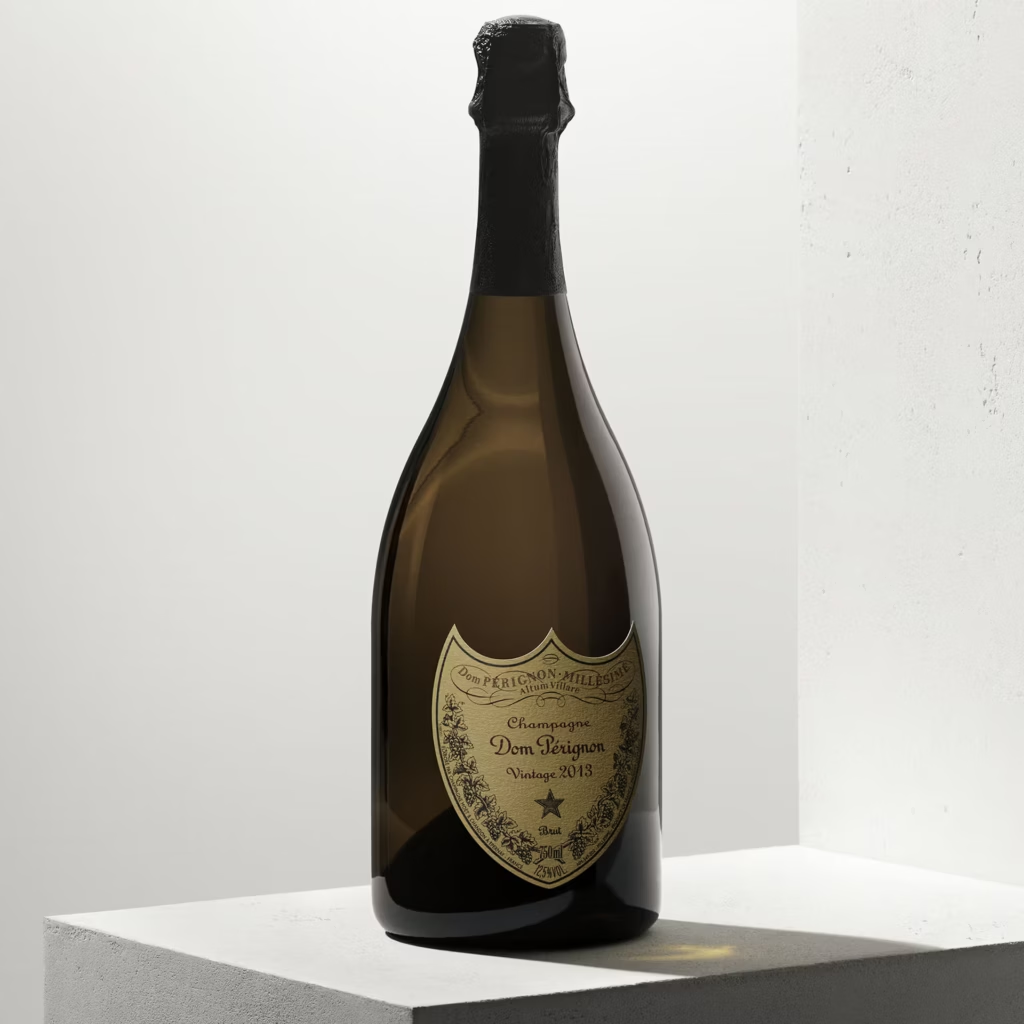
Which Tastes Better: Dom Pérignon or Cristal?
There is no objective winner here because the characteristics of both Champagnes change with each vintage. Still, recent releases provide a useful picture of the broader stylistic differences.
Dom Pérignon generally leans toward harmony, breadth and expression. Depending on the vintage, expect combinations of ripe fruit, citrus, floral notes, toast, minerality and a creamy or expansive texture. The 2018 vintage, for example, has been described by critics as vibrant and precise while retaining ripe fruit and notable intensity.
Cristal tends to emphasize precision, tension and minerality. Louis Roederer describes the 2016 vintage through ripe fruit, saline Chardonnay, chalk and a long crystalline finish, with the wine balancing concentration against freshness and finesse.
The buyer shorthand is fairly simple. If you prefer a broader, harmonious and expressive Champagne, start with Dom Pérignon. If you prefer minerality, tension, salinity and precision, Cristal may be more compelling. Neither is objectively better. They simply approach prestige Champagne differently.

Which Costs More?
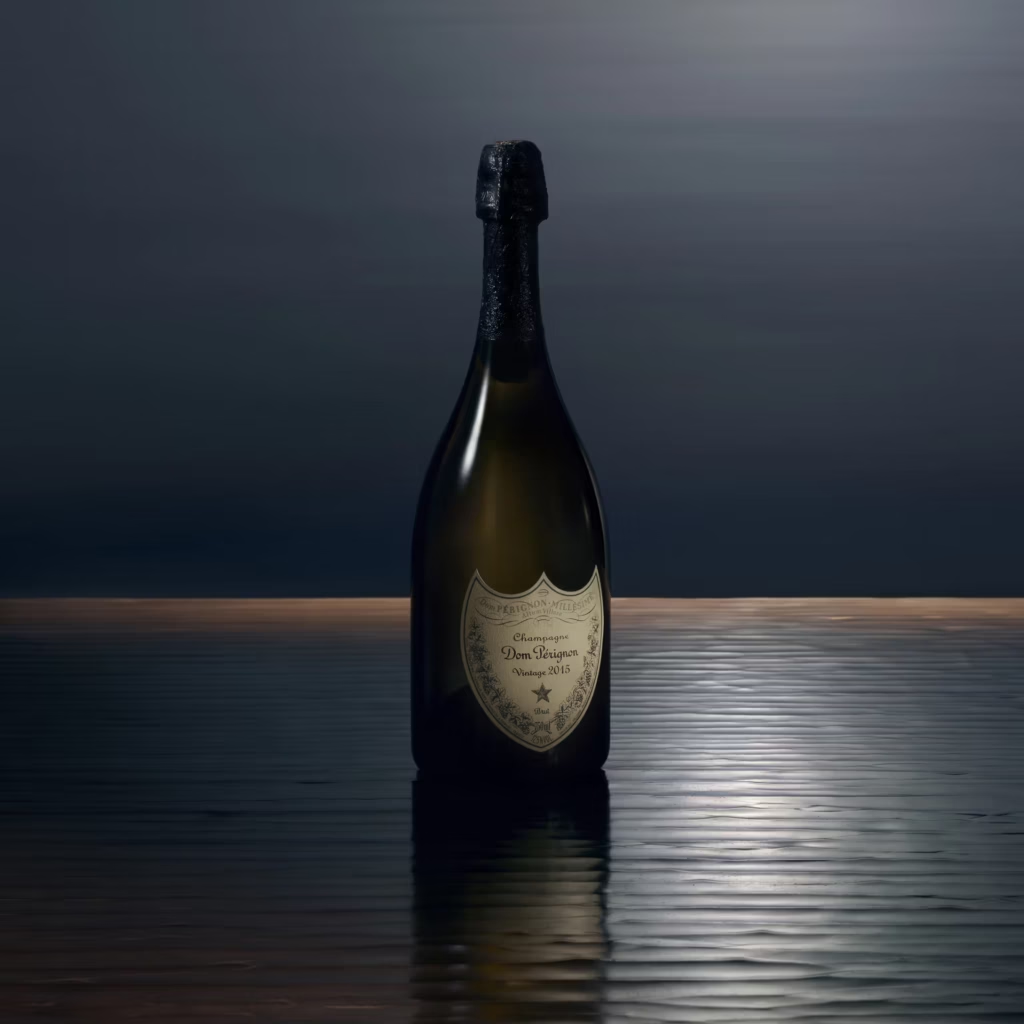
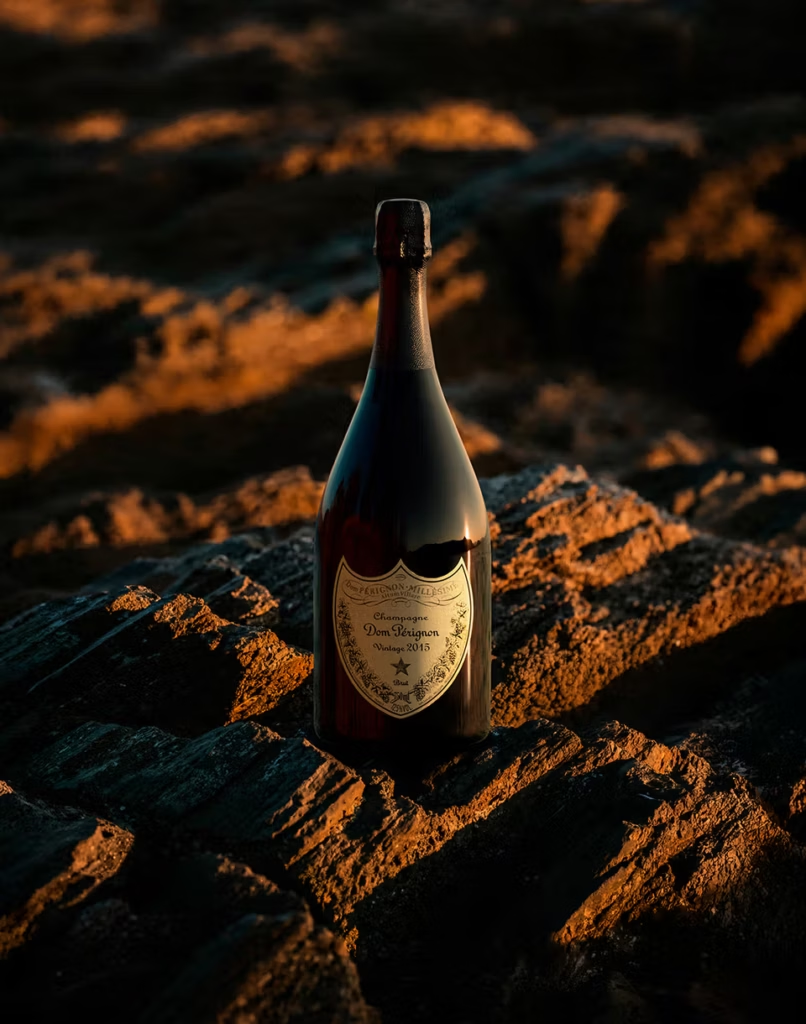
Cristal generally costs more than Dom Pérignon. As one current retail example, Wine.com lists a standard 750-milliliter bottle of Dom Pérignon Vintage 2015 at approximately $300. Cristal 2016 has recently been listed around $370, while gift-box presentations can push closer to $380.
Those numbers should be treated as snapshots rather than fixed MSRPs. Champagne pricing can shift significantly based on vintage, retailer, bottle size, availability, provenance and packaging. The larger takeaway is more useful: Dom Pérignon usually provides the lower financial entry point.
For a buyer trying prestige Champagne for the first time, that makes Dom particularly attractive. Cristal requires a larger splurge, meaning the extra emphasis it places on provenance, precision and enthusiast appeal needs to matter to you.
Which Is More Exclusive?
It depends on what exclusivity means to you. In terms of cultural prestige and universal recognition, Dom Pérignon has the advantage. The name alone communicates luxury to an audience far beyond dedicated wine drinkers.
Cristal offers a different type of exclusivity. Its vineyard-focused positioning, selective production and distinct house style give it serious cachet among enthusiasts and collectors. Louis Roederer describes Cristal as coming from the finest chalky plots of its estate and being produced only when maturity reaches the required level.
Think of it this way: Dom Pérignon might make the bigger statement across a room, while Cristal may generate the longer conversation with the wine enthusiast sitting at the table.

Which Champagne Ages Better?
Call this one a tie. Both houses consider time fundamental to the development of their prestige Champagnes. Dom Pérignon takes at least eight years to elaborate a standard Vintage, while its Plénitude program explores how the wine transforms through considerably longer periods of maturation. LVMH notes that Plénitude 2 requires 15 years or more of elaboration.
Cristal is similarly designed for longevity. Louis Roederer describes six to 10 years of bottle aging before release and explicitly positions Cristal as a Champagne capable of continuing to develop in a properly maintained cellar.
If you are buying specifically to cellar, however, vintage quality should carry more weight than simply choosing Cristal over Dom Pérignon or vice versa. Storage conditions, provenance and the characteristics of the individual harvest all matter.

Which Is Better for a Gift?
FC Pick: Dom Pérignon.
For weddings, anniversaries, promotions, milestone birthdays and other major occasions, Dom Pérignon has an enormous advantage: virtually everyone understands the gesture. The recipient does not need to know what happened during the growing season or which villages supplied the fruit. A bottle of Dom communicates celebration and luxury immediately.
Cristal is certainly an impressive gift, and for a knowledgeable Champagne drinker it might actually be the more thoughtful choice. But if you do not know the recipient’s preferences and simply want the bottle with the greatest universal impact, Dom Pérignon gets the nod.

Which Is Better for a Champagne Enthusiast?
FC Pick: Cristal.
This is where the equation flips. Someone who spends time thinking about terroir, vineyard sourcing, vintage variation, minerality and cellar development is more likely to appreciate what Cristal brings to the conversation.
The 2016 release, for example, comes from 32 vineyard plots and combines 58% Pinot Noir with 42% Chardonnay, with Louis Roederer emphasizing the wine’s chalky, saline character and precision.
That does not make Cristal objectively superior to Dom Pérignon. It simply makes the bottle especially compelling for someone whose interest extends beyond the label and into the details of the wine itself.
Dom Pérignon vs Cristal: Which Should You Buy?
Buy Dom Pérignon if you prioritize:
- Universal recognition
- Gifting
- Classic luxury prestige
- A harmonious, expressive style
- Strong aging potential
- A generally lower purchase price
- Your first prestige Champagne
Buy Cristal if you prioritize:
- Vineyard provenance
- Minerality and precision
- Wine-enthusiast cachet
- Long-term cellar potential
- A more specialized luxury purchase
- The bigger splurge

Final Verdict: Dom Pérignon Is the Better Overall Buy
FC Overall Winner: Dom Pérignon.
For most buyers, Dom Pérignon is the better overall purchase. It combines genuine Champagne pedigree, vintage-specific production, long aging potential and enormous cultural recognition while generally costing less than Cristal.
It also succeeds in more situations. Dom works as a wedding gift, milestone bottle, celebratory purchase, introduction to prestige Champagne or cellar addition. You do not need to be deeply invested in wine to understand its appeal, yet there is still enough complexity and pedigree to satisfy experienced Champagne drinkers.
FC Connoisseur Winner: Cristal.
If price is secondary and your interest centers on vineyard provenance, minerality, precision and the wine itself, Cristal becomes the more compelling splurge. Its higher price buys into a more specialized expression of luxury that may resonate especially strongly with serious Champagne enthusiasts.
The final distinction is simple: Dom Pérignon is the bottle we would recommend to more people. Cristal is the bottle we would recommend to the enthusiast who wants to go deeper and is willing to spend more.
Frequently Asked Questions
Is Cristal more expensive than Dom Pérignon?
Generally, yes. Current retail pricing varies by vintage and retailer, but Cristal normally carries a higher purchase price than Dom Pérignon.
Is Cristal better than Dom Pérignon?
Not objectively. Cristal generally emphasizes minerality, precision and vineyard provenance, while Dom Pérignon combines serious Champagne pedigree with wider cultural recognition and a typically lower entry price.
Why is Cristal so expensive?
Cristal combines prestige positioning, selective vintage production, estate vineyard sourcing, long maturation and considerable global demand. Louis Roederer also produces the cuvée only in years when the grapes reach the maturity required by the house.
Is Dom Pérignon always vintage?
Yes. Dom Pérignon is exclusively a vintage Champagne and may choose not to declare a vintage when a harvest does not meet the house’s standards.
Is Cristal always vintage?
Yes. Louis Roederer produces Cristal only in selected years when its grapes achieve the maturity required for the cuvée.
Which is better for a wedding gift?
Dom Pérignon gets the FC pick because of its universal recognition and immediate association with celebration and luxury.
Can you age Dom Pérignon and Cristal?
Yes. Both Champagnes are capable of significant development with proper cellaring. Vintage quality, bottle provenance and storage conditions should also factor into any long-term aging decision.