
After 50 Years, The Jensen Interceptor GTX Is Back With 960 HP

The Jensen Interceptor disappeared from production in 1976, but its return was apparently never going to be a quiet one. Fifty years later, the legendary British grand tourer is back as the Jensen Interceptor GTX, an all-new, track-focused machine packing 960 horsepower from a supercharged 6.8-liter V8.
More importantly, this isn’t another restored or heavily modified vintage Interceptor. Jensen International Automotive, which has built its reputation re-engineering classic examples of the British GT, started from scratch for the GTX. The car rides on a new bonded-aluminum chassis, wears hand-formed aluminum bodywork and serves as an extreme development platform for a new generation of road-going Interceptors planned for the future.
As if 960 horsepower weren’t enough, Jensen says the engine architecture is capable of producing as much as 1,200 hp.

The Jensen Interceptor GTX Is Completely New
That distinction is what makes the Jensen Interceptor GTX particularly significant. Jensen International Automotive has spent years giving original Interceptors modern performance, reliability and craftsmanship while retaining the bones of the classic car. The GTX represents something different: the company’s first clean-sheet design.
Its bonded-aluminum platform is paired with aluminum suspension components and hand-formed aluminum bodywork. Jensen worked with Avant Design on the shape, while Coventry Metalcraft handled the handcrafted body panels using traditional coachbuilding techniques.
The result mixes modern performance-car engineering with the kind of old-school British craftsmanship that feels appropriate for an Interceptor. The design doesn’t simply copy the original, either. Instead, familiar proportions do most of the heritage work. There is a long hood, a fastback roofline and a prominent rear glass treatment that recalls the wraparound rear window that became one of the original Interceptor’s defining features.
From there, things get considerably more aggressive.

A 6.8-Liter Supercharged V8 Makes 960 HP
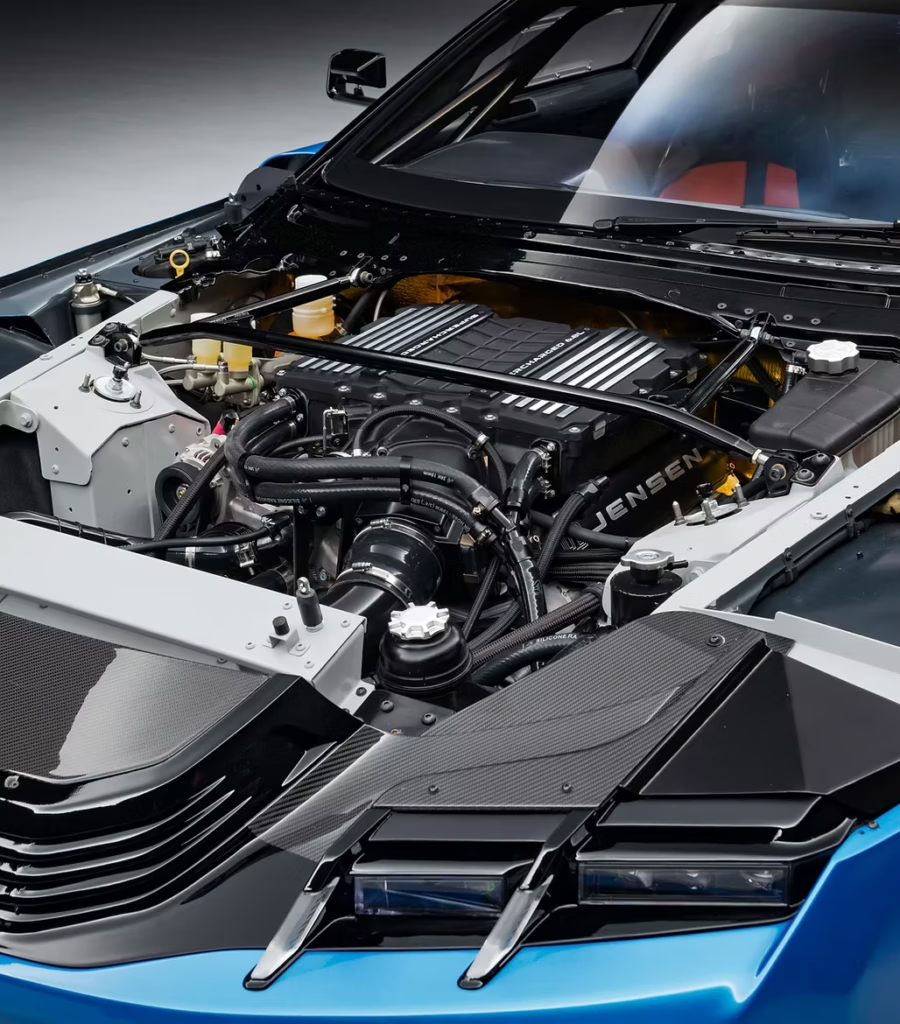
Under that long hood sits a heavily modified GM LT-series V8 developed with Texas-based Late Model Engines. Calling it an off-the-shelf crate motor would sell the package short. The 6.8-liter engine has been extensively reworked, with fewer than 20 percent of its original GM components reportedly remaining.
The build includes CNC-machined cylinder heads, titanium valves, revised variable valve timing and direct injection, a Roots-style supercharger and electronic boost control. It can spin to 7,000 rpm and currently produces 960 horsepower.
Jensen says the engine can ultimately support up to 1,200 hp and more than 1,000 pound-feet of torque at maximum output. Power travels through a carbon-fiber driveshaft to a rear-mounted Samsonas Motorsport six-speed sequential transaxle. Drivers can change gears through steering-column-mounted paddles or a traditional sequential lever.
That hardware tells you almost everything you need to know about the Jensen Interceptor GTX. Jensen isn’t using its new flagship to ease back into the market with a comfortable luxury cruiser. It is effectively putting the foundation of its next road car through the wringer on a racetrack first.
The Jensen Interceptor GTX Has the Chassis to Match
Nearly four-digit horsepower is only useful if the rest of the car can deal with it. The Jensen Interceptor GTX uses aluminum double-wishbone suspension with three-way adjustable Nitron dampers, hydraulic power steering and AP Racing steel brakes with adjustable brake balance.
Forged 20-inch Vossen wheels wrapped in Michelin Pilot Sport 4S tires complete the setup. The decision to retain hydraulic steering is particularly interesting. While the GTX is unquestionably modern, Jensen has also emphasized maintaining an analog quality to the driving experience. That approach makes sense for a company trying to move the Interceptor forward without stripping away the mechanical character that made the original memorable.
Then there is the aero. The GTX features a massive front splitter, brake-extraction vents, aggressive side skirts, a sizable rear diffuser and a towering adjustable rear wing. The latter can help generate more than 770 pounds of downforce.
Visually, the contrast is almost absurd. The original Jensen Interceptor is remembered as an elegant British grand tourer. Its newest descendant looks prepared to spend the afternoon chasing lap times.
Inside The Jensen Interceptor GTX, Luxury Takes A Back Seat
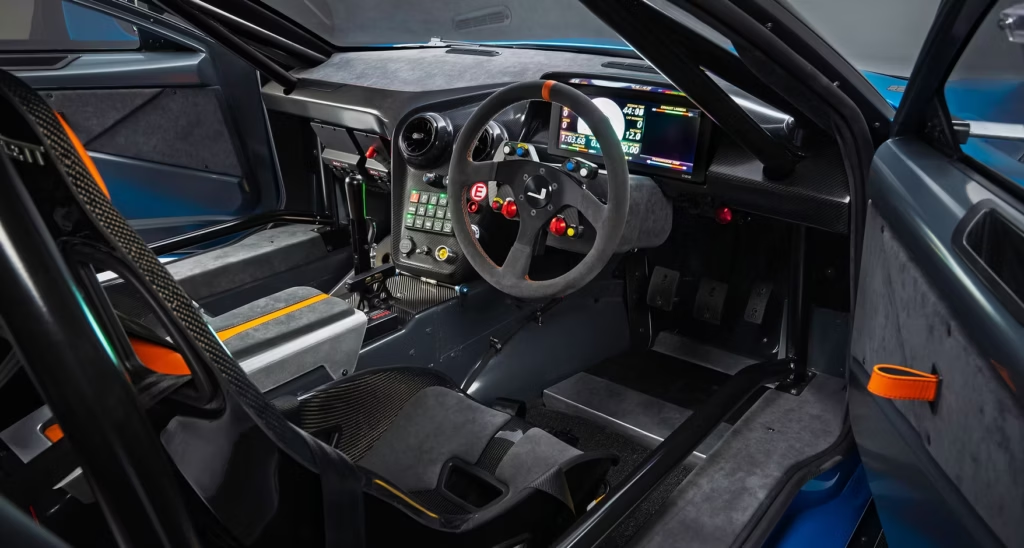
The cabin makes the Jensen Interceptor GTX’s priorities equally clear. Tillett carbon-fiber seats, six-point harnesses, an FIA-approved roll cage, a fire-suppression system and a large motorsport display dominate the interior. There is no conventional central infotainment screen.
Jensen does add Alcantara padding and contrast stitching, but nobody is going to mistake the GTX for a luxury GT in its current form. That is intentional because the track car isn’t meant to represent the final word on the reborn Interceptor.
Road-Going Jensen Interceptor GT And GTR Models Are Coming
The Jensen Interceptor GTX is essentially an enhanced prototype for a broader family of cars. Jensen plans to follow it with two road-going models: the Interceptor GTR and Interceptor GT.
The GTR is expected to sit closer to the GTX with a greater emphasis on performance, while the GT should return the Interceptor to its traditional role as a luxurious grand tourer. Early imagery suggests both models will tone down the GTX’s extreme aerodynamic package, with the GT adopting the cleanest design of the three.
Jensen has also indicated that future street cars could be offered with either an H-pattern manual transmission or an automatic. That makes the GTX’s role much more interesting. Rather than developing a polished road car and creating an extreme track derivative afterward, Jensen is effectively working backward. The company built the monster first, intends to learn from it through continued testing and will use those lessons to shape the cars customers can eventually drive on public roads.
A Very Different Kind of Automotive Comeback
The original Jensen Interceptor was produced from 1966 through 1976 and became known for an unusual combination of British construction, Italian-influenced styling and large American Chrysler V8 engines.
Jensen eventually collapsed during the 1970s, but the Interceptor never completely disappeared from enthusiast culture. Jensen International Automotive later built a business around restoring and extensively re-engineering surviving examples.
The Jensen Interceptor GTX now takes that lineage somewhere entirely new. There is no announced price yet, and Jensen hasn’t confirmed final production timing for the GTX, GT or GTR. The track car will continue through dynamic testing and development before the next phase of the program takes shape.
Still, Jensen has already accomplished something important. After half a century, the company needed a way to make people pay attention to the Interceptor again. It could have returned with something safe, luxurious and familiar. Instead, Jensen built an aluminum-bodied, rear-wheel-drive track car with a sequential gearbox, an enormous rear wing and 960 horsepower from a supercharged V8.
The Jensen Interceptor GTX may ultimately be most important for the road-going cars it helps create, but as a way of announcing that the Interceptor is back, Jensen certainly chose the loudest possible introduction.