
Why The Marshall Acton IV Might Be The Best-Looking Bluetooth Speaker For Modern Interiors
Bluetooth speakers have become remarkably good at disappearing. Their shapes are cleaner, their controls are simpler and their neutral finishes allow them to blend quietly into almost any room. That approach has produced plenty of capable products, but it has also made much of the home-audio category feel visually interchangeable.
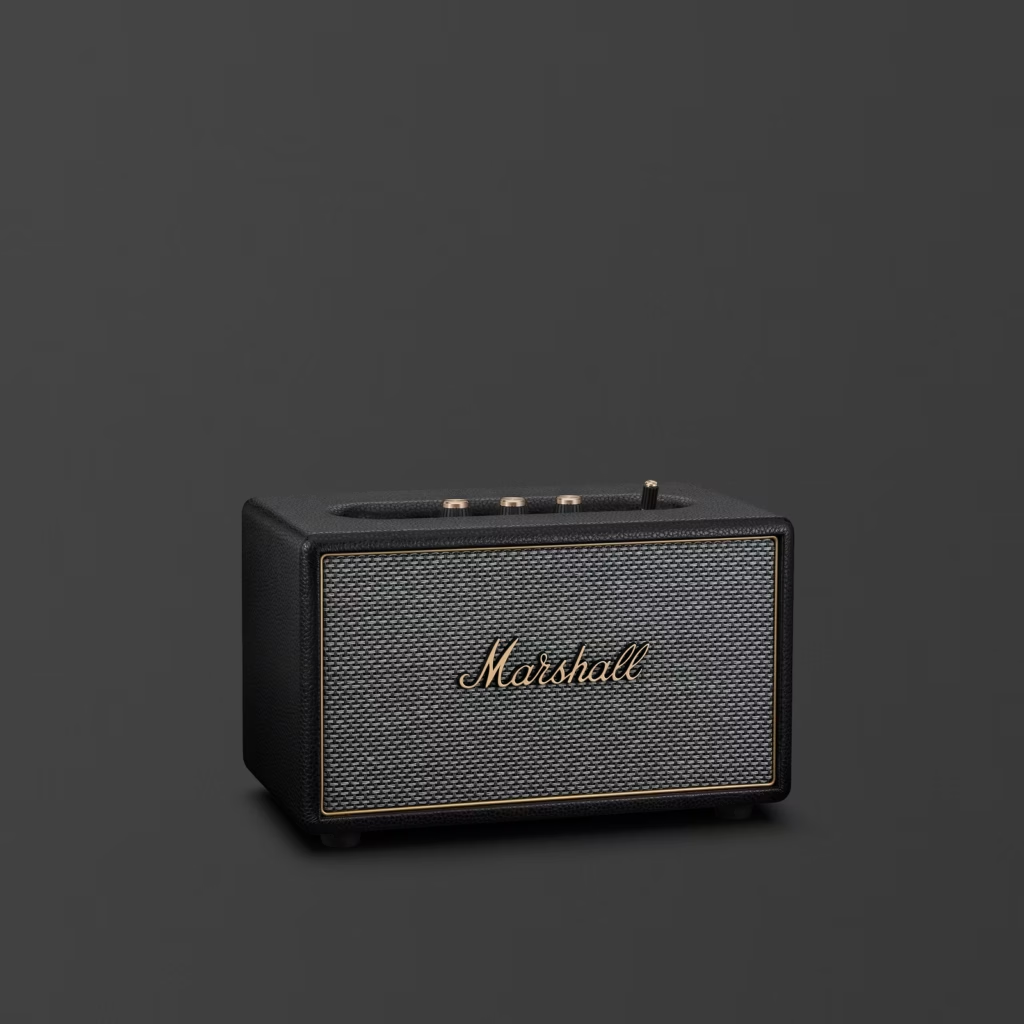
The Marshall Acton IV takes the opposite position. It does not want to vanish into a bookshelf or pretend it is another piece of smart-home infrastructure. With its textured exterior, brass control panel, salt-and-pepper grille and unmistakable script logo, Marshall’s fourth-generation home speaker is designed to be seen. More importantly, it demonstrates why appearance now matters almost as much as connectivity or acoustic performance when choosing technology that will occupy a permanent place in the home.

Marshall Knows Exactly What It Looks Like
Marshall has spent more than six decades developing one of the most recognizable identities in music. The company’s amplifiers did not simply provide volume for generations of performers; their black cabinets, gold accents, textured coverings and handwritten logo became part of rock music’s visual vocabulary.
That heritage gave Marshall a natural advantage when it began translating its identity from stages and studios into consumer audio. While many electronics companies must invent a design language for every new product generation, Marshall already owns one. Its home speakers resemble smaller, more refined relatives of the amplifiers that helped shape the sound and appearance of modern music.
The Marshall Acton IV protects that lineage rather than attempting to modernize it beyond recognition. Marshall has refreshed the proportions and controls, but the speaker remains immediately identifiable. That decision feels particularly relevant in a market where product redesigns frequently remove the very details that gave an object personality in the first place. The Marshall Acton IV does not need to appear futuristic. Its history is the differentiator.
A Speaker Designed To Remain In View
The Marshall Acton IV is the more compact of Marshall’s two new fourth-generation home speakers, making it particularly well suited to apartments, offices, bedrooms and smaller living spaces. Measuring just over ten inches across, it has enough presence to anchor a shelf, console or sideboard without dominating the surrounding furniture.
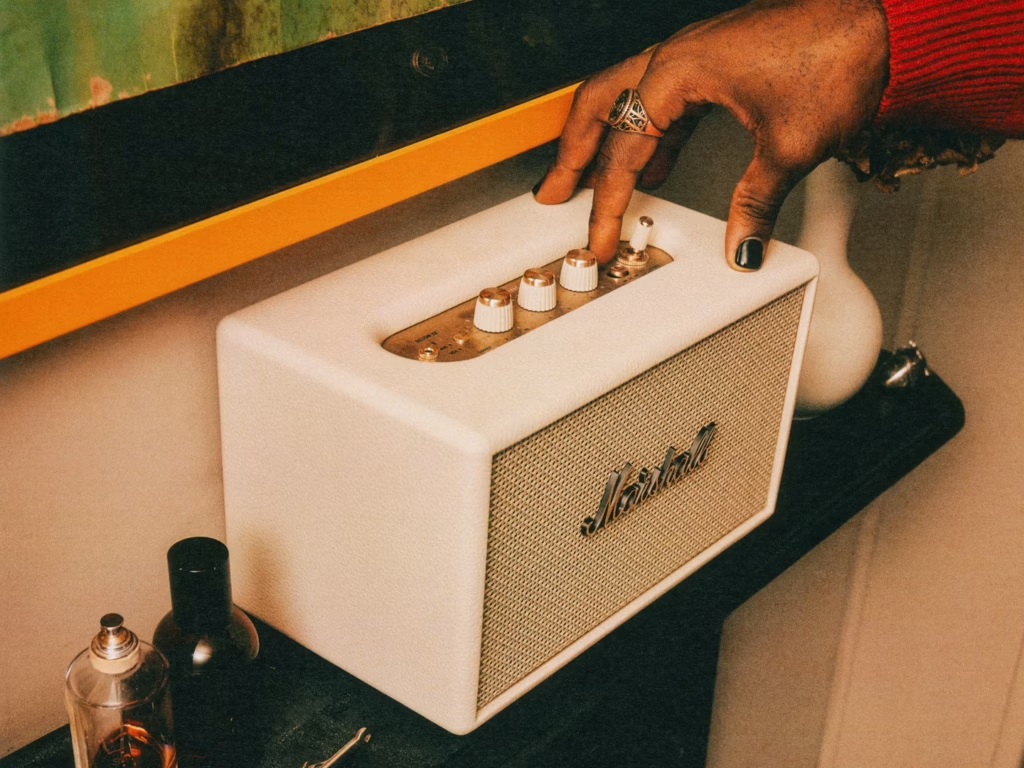
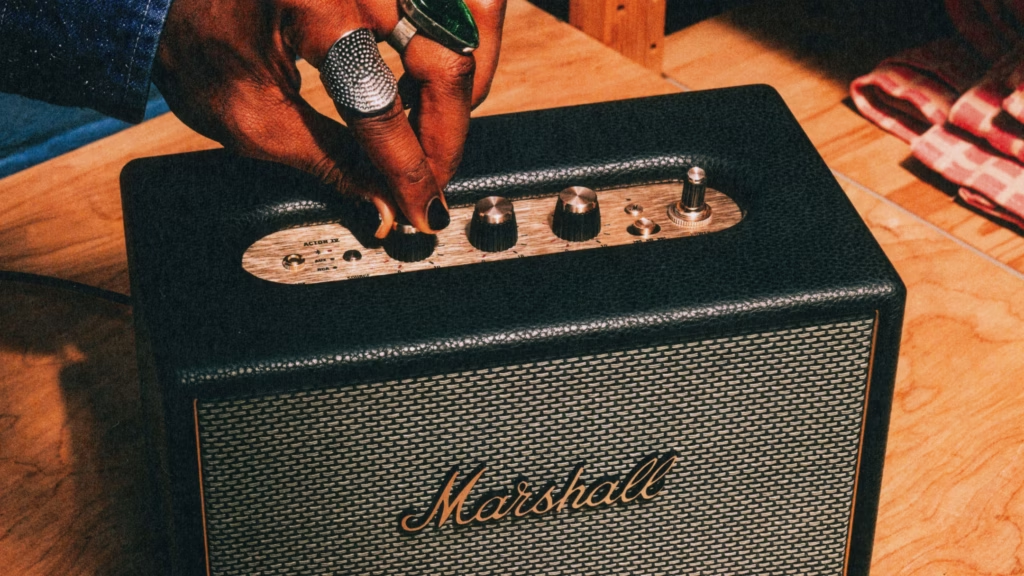
Its visual appeal comes from the tension between decorative character and disciplined proportions. The leather-like wrapping and woven grille give the speaker warmth, while the rectangular cabinet keeps the overall form structured and architectural. Available in black or cream, the Acton IV can either establish contrast within a bright contemporary space or complement interiors built around darker woods, metals and richer materials.
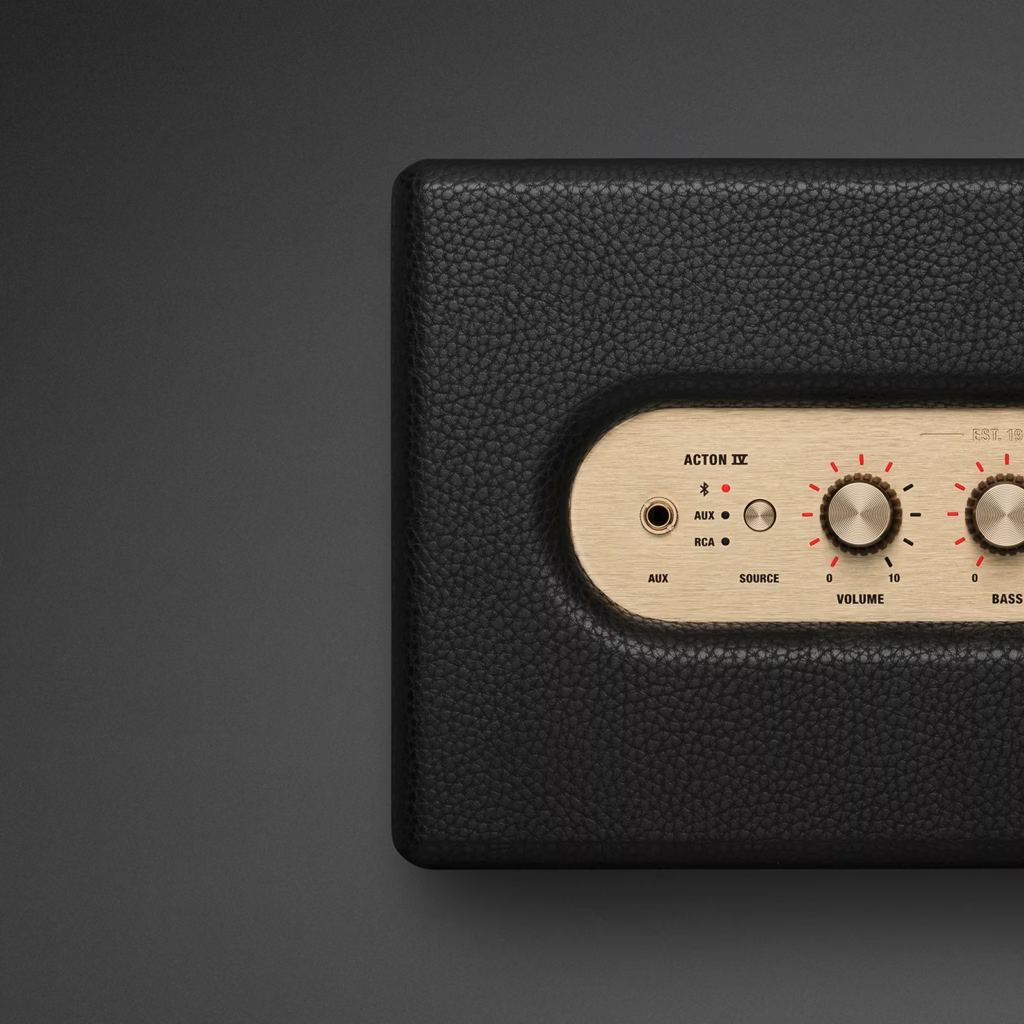
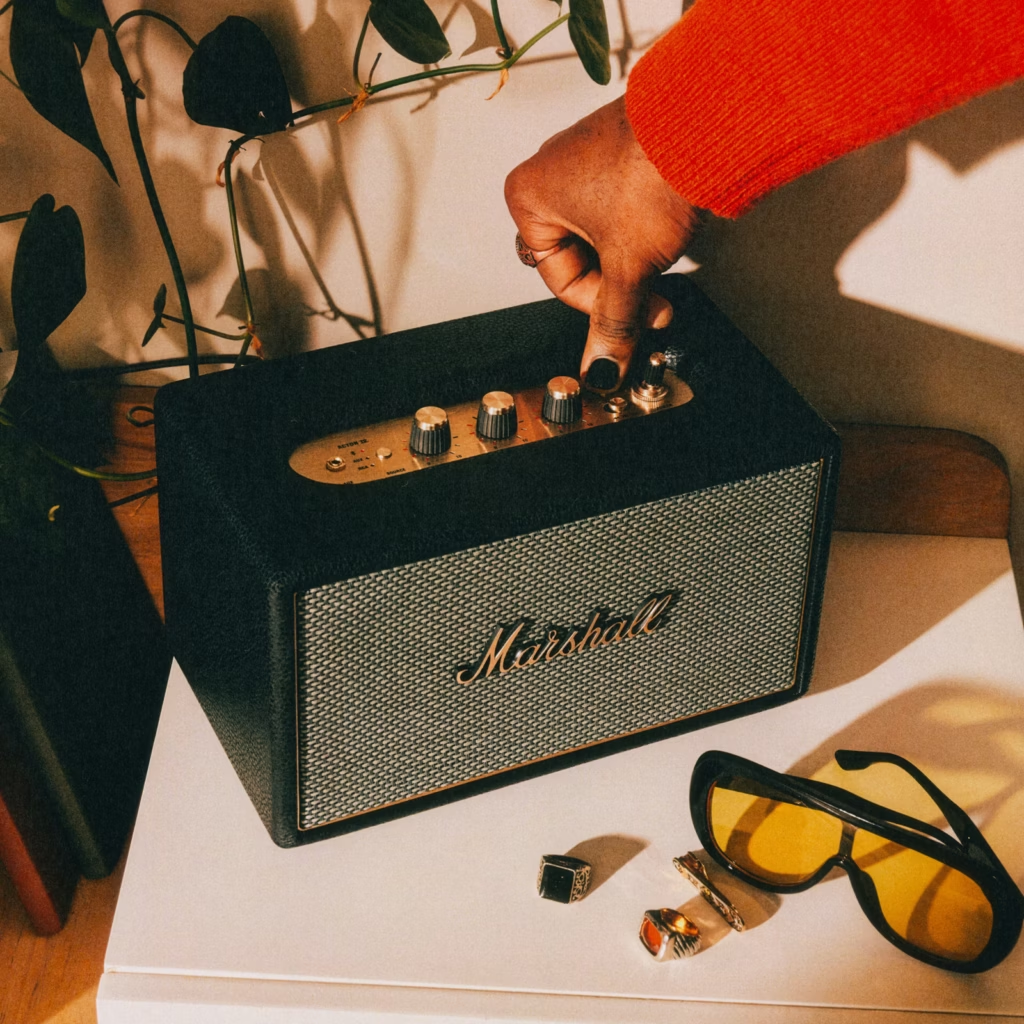
The brass top panel remains one of the speaker’s defining features. Instead of forcing every interaction through a phone, Marshall provides physical controls for volume, bass and treble alongside a media jog, source selector and signature power switch. The knobs do more than provide functionality. They create a tactile connection to the company’s amplifier heritage and make adjusting the speaker feel deliberate rather than disposable.
Marshall has also introduced a customizable M-button that can provide immediate access to selected sound settings or music through Spotify Tap. It is a relatively small addition, but it reflects the broader approach taken with the Acton IV: place modern convenience inside a familiar physical experience rather than replacing that experience entirely.
The Fourth Generation Improves More Than Appearance
The Marshall Acton IV is not merely the previous model wearing a slightly different cabinet. Marshall has upgraded its tweeters and waveguides to spread sound across a wider area, creating a more expansive soundstage for listeners who may not always be positioned directly in front of the speaker.
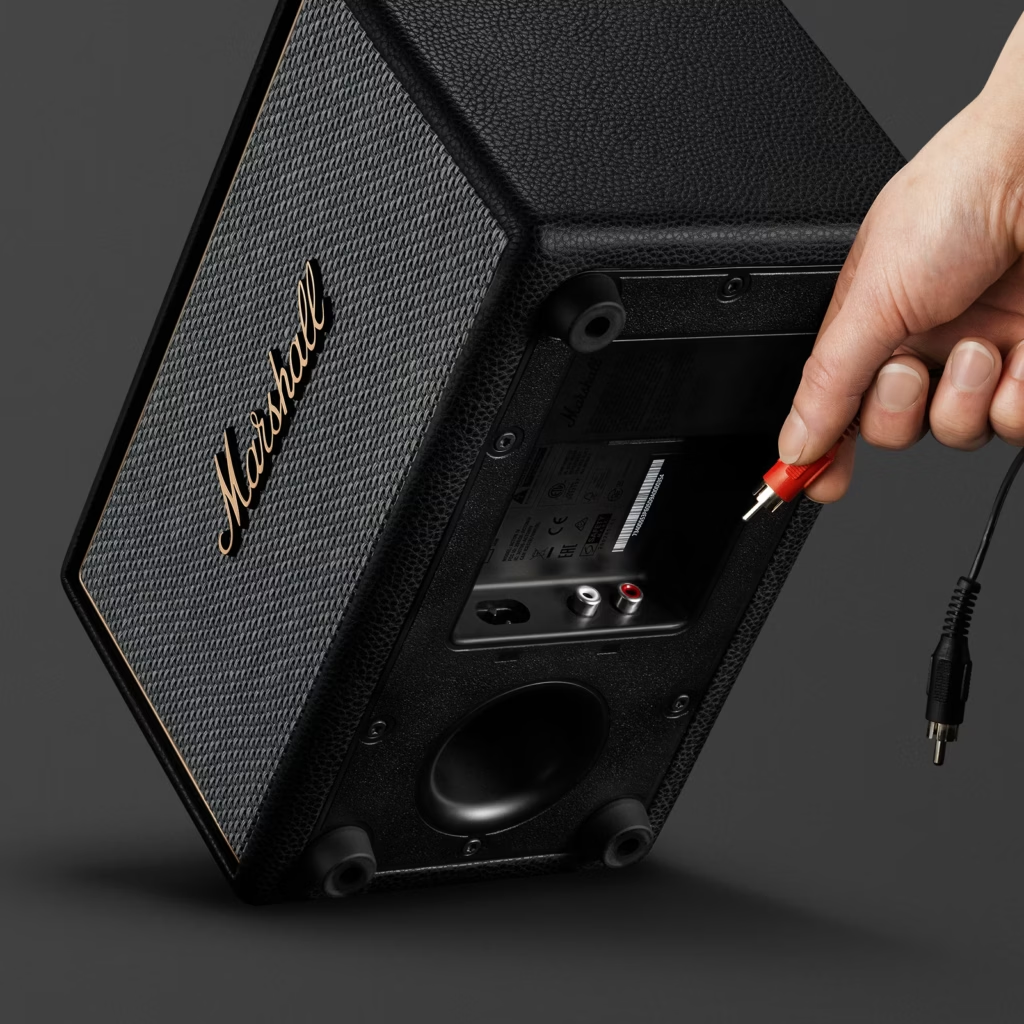
A redesigned bass port is intended to produce cleaner, tighter low frequencies, particularly as the volume increases. Marshall has also adjusted the speaker’s cable placement and airflow so the Marshall Acton IV can sit closer to a wall without compromising its performance. That practical improvement matters because home speakers are rarely positioned under perfect laboratory conditions. They are placed where the furniture, outlets and room layout allow.
Dynamic Loudness technology automatically helps maintain tonal balance across different listening levels. Music should retain more of its warmth and detail at lower volumes, while improved limiting is designed to keep the presentation composed when the speaker is pushed harder. The idea is not simply to make the Marshall Acton IV louder, but to make it more consistent during the way people actually listen throughout the day.
The Marshall Acton IV speaker is equipped with a four-inch woofer, two tweeters and separate Class D amplification for each section. Those components support stereo playback from a cabinet small enough to work in spaces where a traditional component system might feel excessive.
The result, at least on paper, is a speaker designed to provide fuller home audio without requiring the listener to reorganize the room around it.

Modern Connectivity With An Analogue Soul
Bluetooth 5.3 handles everyday wireless playback, while support for several codecs, including AAC and LDAC, gives users more flexibility depending on their source device. Bluetooth multipoint also allows the Marshall Acton IV to remain connected to more than one compatible device, making it easier to move between different phones, tablets or computers.
The Marshall app provides additional control over EQ settings and includes placement compensation to help tailor the sound around the speaker’s position within a room. It is a useful concession to modern ownership, but the app does not become the only way to operate the product. The most important adjustments remain available directly from the top panel.
Marshall has also preserved wired connectivity. An auxiliary input supports additional audio devices, while the addition of RCA connectivity allows users to incorporate a turntable, provided the record player has the necessary preamplification. That combination makes the Acton IV more flexible than a Bluetooth-only speaker and reinforces its position between traditional stereo equipment and contemporary wireless audio.
It can stream from a phone in the afternoon and become part of a vinyl setup later that evening without requiring the owner to choose between convenience and ritual.
Multi-Speaker Audio Comes To The Acton
One of the most meaningful additions is Auracast connectivity. When used within a compatible setup, the technology allows music to play in sync across multiple Marshall Acton IV and Stanmore IV speakers throughout the home.
Marshall’s Heddon streaming hub expands that proposition by acting as the center of a room-to-room listening system. It can also help integrate previous-generation Acton III and Stanmore III speakers, giving existing Marshall owners a path into the company’s expanding home-audio ecosystem without necessarily replacing everything they already own.
This is an important step for Marshall. Its speakers have historically competed as individual design-forward audio products, while companies such as Sonos have built their appeal around connected systems. Auracast and Heddon allow Marshall to move closer to that ecosystem model without abandoning the physical controls and amplifier-inspired styling that distinguish its products.
The Acton IV can therefore function as a single statement speaker or become one component within a larger home setup.
Who Is The Marshall Acton IV For?
The Marshall Acton IV makes the strongest case for buyers who consider technology part of their interior environment rather than something that should always remain hidden. It is especially compelling for apartments, home offices, bedrooms and smaller living rooms where a full stereo system may be unnecessary but a portable speaker may feel temporary or underpowered.
Its physical controls, RCA input and recognizable design should also appeal to listeners who appreciate analogue equipment but still want the convenience of wireless playback. The speaker does not recreate the complexity of a traditional hi-fi system, but it borrows enough of that experience to feel more substantial than a generic Bluetooth box.
There are situations where another product may be more appropriate. The Acton IV requires an electrical outlet and is not intended to operate as a portable, battery-powered speaker. Buyers trying to fill a particularly large or open space may prefer the larger Stanmore IV, while someone already deeply invested in another multi-room platform may find it easier to remain within that ecosystem. The Marshall Acton IV is not attempting to be everything. Its appeal comes from understanding the type of home and listener it was designed to serve.
Where The Acton IV Fits In Marshall’s Lineup
Priced at $329.99 in the United States, the Marshall Acton IV sits at the compact end of Marshall’s stationary home-speaker collection. It offers the core fourth-generation design, connectivity and acoustic improvements in a format that can fit comfortably into smaller rooms.
The Stanmore IV, priced at $429.99, follows the same visual and technological philosophy but provides a larger option for listeners who need greater output and presence. The decision between them will largely come down to room size and how prominent the speaker should feel within the space. For many buyers, however, the Marshall Acton IV may represent the more balanced proposition. It delivers the visual impact associated with Marshall without requiring the physical footprint of a larger audio centerpiece.
Final Editorial Verdict
Declaring the best-sounding Bluetooth speaker requires controlled listening and direct comparison. Determining which products make the strongest design statement is different, and the Marshall Acton IV has an unusually persuasive case.
Its appeal does not come from disguising technology as decoration. Marshall has instead transformed its own musical heritage into functional industrial design. The grille, brass controls, tactile switches and amplifier-inspired cabinet are not superficial references added to make an ordinary speaker appear nostalgic. They form a coherent identity that has been developed across decades.
The fourth generation strengthens that identity with wider sound dispersion, cleaner bass, room-aware adjustment, analogue inputs and a more credible path toward multi-speaker audio. Those improvements make the Acton IV more capable without making it less recognizable.
That may ultimately be its greatest success. In a category increasingly populated by products designed to disappear, the Marshall Acton IV understands that the right object can improve a room before anyone presses play.